

Neck or back pain after a car accident does not always come from a herniated disc or broken bone. Sometimes, the source is a small joint that connects the spine’s bones. These joints can become irritated or injured in a collision, causing pain that can last weeks, months, or longer.
Facet joint syndrome after a car accident can affect the neck or lower back, making everyday activities such as driving, working, and sleeping uncomfortable.
For California accident victims, medical records can help establish whether a collision caused a new injury or aggravated an existing spinal condition.
What Is Facet Joint Syndrome?
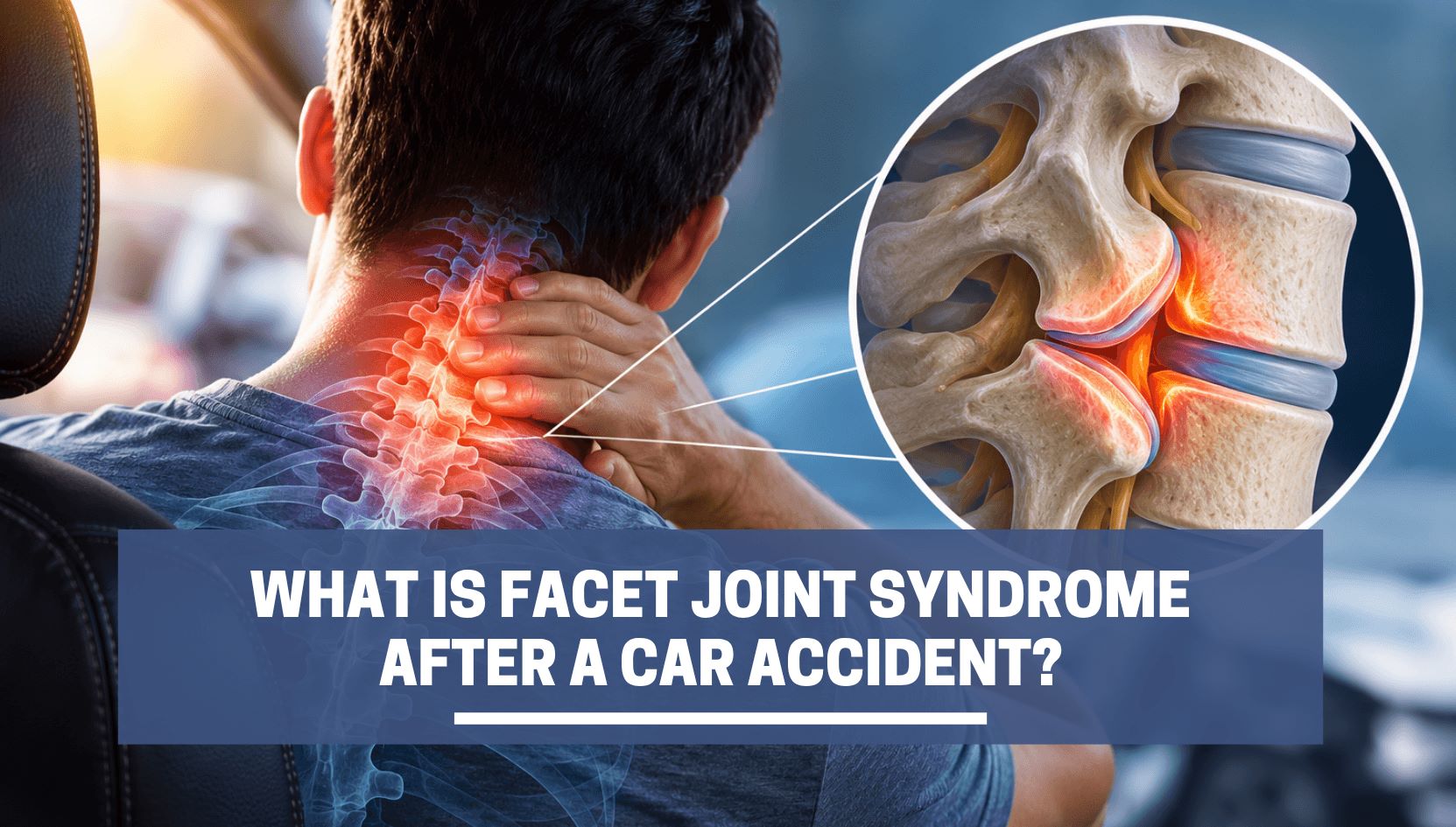
Facet joints are small joints located along the back of the spine. They connect neighboring vertebrae, help control movement, and prevent excessive twisting or bending.
Each joint contains cartilage and is surrounded by a protective capsule. When a joint becomes irritated, inflamed, or damaged, it may cause pain and stiffness. Doctors sometimes describe this condition as facet joint syndrome, facet joint dysfunction, or facet joint inflammation.
Facet joint problems can develop from everyday wear and tear, but a sudden impact can also injure these joints or worsen an existing condition.
How Can a Car Accident Cause a Facet Joint Injury?
A collision can force the spine to move beyond its normal range of motion. Rapid bending, twisting, or compression may strain the facet joints and surrounding tissues.
A facet joint injury can occur during several types of accidents, including:
- Rear-end collisions: Sudden backward-and-forward neck movement can strain the cervical facet joints.
- Side-impact crashes: Lateral movement and twisting may place uneven stress on spinal joints.
- Head-on collisions: Rapid deceleration can force the spine into abnormal positions.
Whiplash and Cervical Facet Joint Injuries
Whiplash occurs when the neck rapidly accelerates and decelerates during a collision. This movement can strain muscles, ligaments, and the small joints connecting the cervical vertebrae.
A whiplash facet joint injury may cause persistent neck pain, headaches, and discomfort extending into the shoulders.
Not everyone who experiences whiplash develops facet joint syndrome. However, cervical facet joints are recognized as a potential source of chronic pain following whiplash-associated injuries, according to research published in the National Library of Medicine.
For more information, see our guides to whiplash and car accident claims and California whiplash injuries.
Lumbar Facet Joint Injuries
A lumbar facet joint injury affects the lower back. It can occur when the torso twists, bends backward, or is suddenly compressed during a crash. Lumbar facet pain can make standing, bending, walking, or remaining in one position uncomfortable. Some people also experience pain extending into the buttocks or upper thighs.
What Are the Symptoms of Facet Joint Syndrome?
Facet joint syndrome symptoms vary depending on which part of the spine is affected. Pain may start immediately after an accident or develop later.
Common symptoms include:
- Persistent neck or lower back pain
- Stiffness and reduced range of motion
- Pain when twisting, turning, or bending backward
- Tenderness near the affected joints
- Headaches or discomfort extending into nearby areas
The following table compares cervical and lumbar facet joint syndrome.
| Symptom | Cervical Facet Joint Syndrome (Neck) | Lower Facet Joint Syndrome (Lower Back) |
| Pain Location | Neck, shoulders, or upper back | Lower back, buttocks, or hips |
| Referred Pain | Headaches or shoulder discomfort | Pain extending into the upper thigh |
| Pain Triggers | Turning or extending the neck | Twisting, standing, or bending backward |
| Stiffness | Difficulty turning the head | Reduced lower back flexibility |
| Common Limitations | Driving, looking upward, or desk work | Standing, lifting, or walking |
Cervical Facet Joint Syndrome (Neck): Neck, shoulders, or upper back
Lower Facet Joint Syndrome (Lower Back): Lower back, buttocks, or hips
Cervical Facet Joint Syndrome (Neck): Headaches or shoulder discomfort
Lower Facet Joint Syndrome (Lower Back): Pain extending into the upper thigh
Cervical Facet Joint Syndrome (Neck): Turning or extending the neck
Lower Facet Joint Syndrome (Lower Back): Twisting, standing, or bending backward
Cervical Facet Joint Syndrome (Neck): Difficulty turning the head
Lower Facet Joint Syndrome (Lower Back): Reduced lower back flexibility
Cervical Facet Joint Syndrome (Neck): Driving, looking upward, or desk work
Lower Facet Joint Syndrome (Lower Back): Standing, lifting, or walking
Facet joint pain after a car accident may feel like a constant ache or a sharp pain during certain movements.
Symptoms can also appear hours or days after the collision. Our article on delayed pain after a car accident explains why some injuries aren’t immediately apparent.
New weakness, numbness, loss of bladder or bowel control, or severe neurological symptoms require urgent medical evaluation.
Facet Joint Syndrome vs. Herniated Disc
Facet joint injuries and herniated discs can both cause neck or back pain, but they affect different spinal structures.
A herniated disc occurs when material inside a spinal disc pushes through its outer layer. If the disc irritates or compresses a nerve, it may cause pain, numbness, tingling, or weakness that can extend into an arm or leg.
Facet joint syndrome typically causes neck or back pain that may spread to nearby areas. Unlike a herniated disc pressing on a nerve, it usually does not cause numbness, tingling, or muscle weakness. However, both conditions can occur at the same time, and doctors cannot tell them apart based on symptoms alone.
For additional information, see our comparison of bulging discs and herniated discs after a car accident and overview of common spinal injuries from car accidents.
How Do Doctors Diagnose Facet Joint Syndrome?
Because several spinal conditions cause similar symptoms, doctors review the patient’s medical history, accident details, and physical limitations.
A medical evaluation may include:
- Physical examination: Assessing tenderness, spinal movement, and neurological function.
- Imaging tests: X-rays, CT scans, or an MRI may identify fractures, disc problems, or degenerative changes. Imaging alone cannot confirm that a facet joint is causing pain.
- Diagnostic injections: A medial branch block uses local anesthetic to temporarily numb the nerves that supply a suspected painful facet joint.
According to clinical guidelines on facet joint pain, temporary pain relief following a medial branch block may indicate that the facet joints are causing the pain. Doctors may recommend a second injection before proceeding with certain treatments.
What Treatments Are Available for Facet Joint Injuries?
Treatment depends on symptom severity and how the patient responds to initial care.
Conservative Treatment
Doctors usually begin with nonsurgical options, including:
- Physical therapy to improve mobility and strengthen supporting muscles
- Anti-inflammatory or other pain medication when medically appropriate
- Modified activities that reduce stress on affected joints
- Gradual exercise and rehabilitation
Interventional Pain Management
If conservative treatment doesn’t provide enough relief, a pain specialist may recommend additional procedures.
These may include diagnostic medial branch blocks or radiofrequency ablation, which uses controlled heat to disrupt pain signals from nerves supplying the affected joints. Radiofrequency ablation may provide several months of pain relief for some patients, although results vary and pain can return as nerves regenerate.
Surgery is generally not recommended for isolated facet joint pain without another condition requiring surgical treatment.
Why Can Facet Joint Pain Continue After a Minor Accident?
A relatively low-speed collision can still cause lasting neck or back pain. The amount of visible vehicle damage does not necessarily establish whether someone sustained a spinal injury.
Persistent pain may involve damage to the joint capsule, ongoing irritation, or other injuries affecting nearby structures.
Pre-existing spinal degeneration may also influence recovery. Some people have age-related facet joint changes without experiencing symptoms until an accident aggravates the affected area.
Chronic pain requires careful evaluation because persistent symptoms don’t necessarily mean the facet joints are the source.
Can a Car Accident Aggravate a Pre-Existing Facet Joint Condition?
Yes. A collision may aggravate an existing spinal condition, even when degenerative changes were present before the accident. Insurance companies may point to age-related changes visible on an MRI and argue that the claimant’s pain existed beforehand. However, pre-existing spinal degeneration does not rule out an accident-related injury.
Under California law, an injured person may recover damages when an accident aggravates a pre-existing condition. California Civil Jury Instruction (CACI) No. 3927 addresses compensation for the additional harm caused by the collision, rather than the underlying condition itself.
Medical records can help distinguish previous symptoms from new or worsening problems.
How Does Facet Joint Syndrome Affect a California Injury Claim?
A facet joint injury settlement depends on the circumstances of the accident, the available medical evidence, and how the injury affects the person’s life.
Evidence supporting a claim may include:
- Medical records documenting symptoms and treatment following the collision
- Imaging results and diagnostic injection findings
- Physical therapy records showing functional limitations
- Previous medical records establishing the person’s condition before the accident
- Documentation of missed work, medical expenses, and ongoing treatment needs
Facet joint injury compensation may include medical expenses, lost earnings, future treatment costs, and pain and suffering when supported by the evidence. A diagnosis alone does not determine compensation, and insurers may dispute whether the collision caused or aggravated the condition.
California allows two years to file a personal injury lawsuit, although exceptions and shorter deadlines may apply.
Our California car accident settlement guide explains how insurers evaluate and resolve injury claims.
Get Legal Help for a Facet Joint Injury After a Car Accident
Persistent neck or back pain after a collision can affect your ability to work, drive, and carry out everyday activities. If you’ve suffered a facet joint injury, medical records can help establish how the accident caused or worsened your condition.
At Shirvanian Law Firm, we help California accident victims pursue compensation for medical expenses, lost income, and pain and suffering. Contact us for a free consultation to discuss your injuries and legal options.