

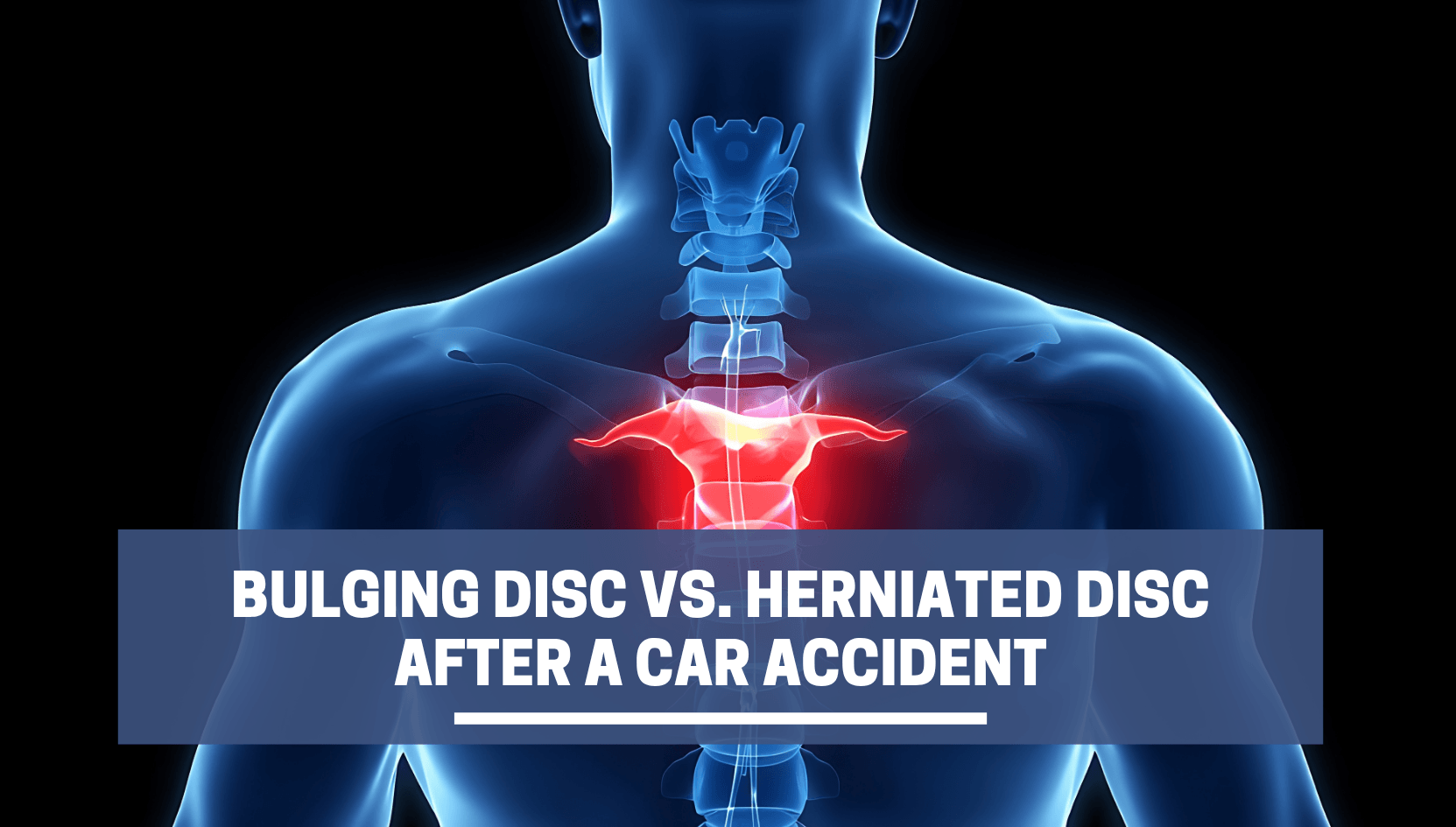
Neck or back pain after a crash can make everyday activities difficult, but the exact diagnosis is important. A bulging disc and a herniated disc are not the same injury, even though both involve the cushions between the bones of the spine and can cause similar symptoms.
Understanding the difference between a bulging disc vs. a herniated disc after a car accident can help you understand your diagnosis, treatment options, and the medical evidence that may support an injury claim.
What Is a Bulging Disc?
Your spine is made up of bones called vertebrae. Intervertebral discs between them cushion the spine and allow it to move.
A bulging disc occurs when part of a disc extends beyond its normal position. Unlike a herniation, the outer portion of the disc remains intact. A bulging disc does not always cause symptoms. Some people may have one without realizing it. However, pain and other symptoms can develop when the disc irritates or presses on a nearby nerve.
What Is a Herniated Disc?
A herniated disc occurs when the softer material inside a spinal disc pushes through a weakened or damaged portion of the disc’s outer layer.
A herniated disc can put pressure on nearby nerves or the spinal cord and cause pain, numbness, or weakness. A disc herniation can result from injury or strain, although age-related changes can also make discs more vulnerable.
Bulging Disc vs. Herniated Disc: What Is the Difference?
Although people sometimes use the terms interchangeably in everyday conversation, they describe different changes to a spinal disc.
| Bulging Disc | Herniated Disc |
| Disc extends beyond its normal boundary | Inner disc material pushes through a weakened or damaged area |
| Outer portion remains intact | Outer portion has been disrupted |
| May cause no symptoms | May occur without symptoms |
| Often involves a broader area of the disc | Usually involves a more localized area of the disc |
Herniated Disc: Inner disc material pushes through a weakened or damaged area
Herniated Disc: Outer portion has been disrupted
Herniated Disc: May occur without symptoms
Herniated Disc: Usually involves a more localized area of the disc
One is not automatically more disabling than the other. The location of the spinal disc injury, degree of nerve involvement, symptoms, and response to treatment may be more important than the name of the diagnosis.
How Can a Car Accident Cause or Aggravate a Disc Injury?
A collision can suddenly force the neck or back to bend, twist, or move beyond its normal range. The force of a collision can injure spinal structures, and a disc may herniate or rupture because of injury or strain.
A car accident back injury may affect discs in the lumbar, or lower, spine. A car accident neck injury may involve the cervical spine. Rear-end and other collisions can also produce rapid movement of the neck and surrounding tissues.
In some cases, the trauma may also damage the spinal cord. Learn more about spinal cord injury claims and the common spinal cord injuries that can result from a crash.
What Are the Symptoms of a Disc Injury After a Car Accident?
Symptoms depend partly on where the injured disc is located and whether it affects a nerve.
Cervical Disc Injury
A cervical disc injury affects the neck. Symptoms associated with cervical disc herniation can include:
- Neck pain
- Pain around the shoulder blade
- Pain traveling into the shoulder, arm, or hand
- Numbness or tingling
- Muscle weakness
Lumbar Disc Injury
A lumbar disc injury affects the lower back. Symptoms can include:
- Lower back pain
- Pain in the buttock, hip, or leg
- Numbness or tingling
- Leg or foot weakness
- Sciatica, or pain associated with irritation of the sciatic nerve
Disc injuries can also cause radiculopathy, which occurs when a spinal nerve root is irritated or compressed. Symptoms may extend beyond the injured disc.
Not everyone feels pain immediately following a collision. Our guide to delayed pain after a car accident discusses why symptoms may become noticeable later.
Seek prompt medical attention for severe weakness or numbness, or loss of bladder or bowel control.
How Do Doctors Diagnose Disc Injuries?
A diagnosis begins with your medical history and a physical examination. A doctor may ask when the neck pain or back symptoms began and whether they travel into an arm or leg.
The physical examination may evaluate:
- Muscle strength
- Reflexes
- Sensation
- Movement
- Areas of numbness or weakness
An MRI can show spinal discs and may identify a disc protrusion, herniation, or pressure on the spinal canal. An X-ray alone cannot diagnose a herniated disc. In some cases, electromyography (EMG) and nerve conduction tests can help determine which nerve root may be affected.
However, an MRI after a car accident is not necessary for every patient who develops back or neck symptoms. For uncomplicated acute low-back pain without red flags, an MRI is generally not recommended as the first imaging test.
Your doctor can determine appropriate testing based on your symptoms and examination.
How Are Bulging and Herniated Discs Treated?
Treatment varies based on the injury’s location and severity, nerve involvement, symptoms, and how well a patient responds to initial care.
Many patients begin with nonsurgical treatment.
Conservative Treatment
Treatment may include:
- Temporary activity modification
- Medication for pain or inflammation
- Physical therapy
- Exercises to improve strength and flexibility
Many people with herniated discs improve with treatment, although recovery times vary.
Injections
For some patients, epidural injections may be considered to reduce inflammation and relieve symptoms associated with an irritated spinal nerve. Relief may be temporary, and injections do not repair the underlying disc.
Surgery
Spinal surgery may be considered when symptoms do not improve with other treatment or when neurological problems are present. One possible procedure is a discectomy, which removes part or all of the affected disc.
What If You Had Degenerative Disc Changes Before the Accident?
This can become an important issue in a bulging disc injury claim. Spinal discs naturally change with age. As a result, an MRI taken after a collision may show degeneration or other changes that existed before the crash.
But that does not necessarily determine whether the crash caused a new injury or aggravated a pre-existing condition.
California’s civil jury instructions specifically address pre-existing conditions. CACI No. 3927 explains that an injured person cannot recover damages for a condition that existed before the defendant’s conduct. However, damages may be available when the defendant’s wrongful conduct makes a pre-existing condition worse.
For example, a person may have had age-related disc changes without symptoms before a collision and then develop new pain, numbness, or functional limitations afterward. Medical records and physician opinions may become important when determining what changed after the crash.
The same issue can arise after different types of collisions, including a scooter vs. car accident in California.
What Medical Evidence Can Help Document a Disc Injury?
A diagnosis alone does not establish how or when an injury occurred. When someone claims a herniated disc from a crash, medical documentation can help establish what happened before and after the collision.
Relevant evidence may include:
- Emergency room or urgent care records
- Records showing when symptoms first appeared
- Physical examination findings
- MRI, CT, or other imaging reports
- Records of nerve compression or neurological symptoms
- Physical therapy and specialist records
- Injection or surgical records
- Prior medical records involving the neck or back
- Physician opinions about the cause or aggravation of the condition
How Can a Disc Injury Affect a Car Accident Claim?
There is no standard settlement amount for a herniated disc. Two people with similar MRI findings may have very different symptoms, treatment needs, recovery periods, and effects on their ability to work or perform normal activities.
Factors that may affect the value and documentation of a disc injury after a car accident claim include the extent of the injury, medical treatment, future care, lost income, pain and other effects of the injury, available insurance coverage, and evidence concerning fault.
Our California car accident settlement guide explains how an injury claim may progress from the collision through settlement negotiations or litigation. You can also learn more about the factors that may contribute to high settlement injury cases.
Talk to a Los Angeles Car Accident Attorney About a Disc Injury
A bulging or herniated disc can interfere with work, sleep, driving, and other everyday activities. Serious collisions may also cause other injuries, including a traumatic brain injury or damage to other parts of the spine.
If you have been diagnosed with a bulging or herniated disc after a California collision, a Los Angeles car accident attorney at The Shirvanian Law Firm can review the accident, your medical records, and the effect the injury has had on your life. Contact our firm for a free consultation to discuss your case.