

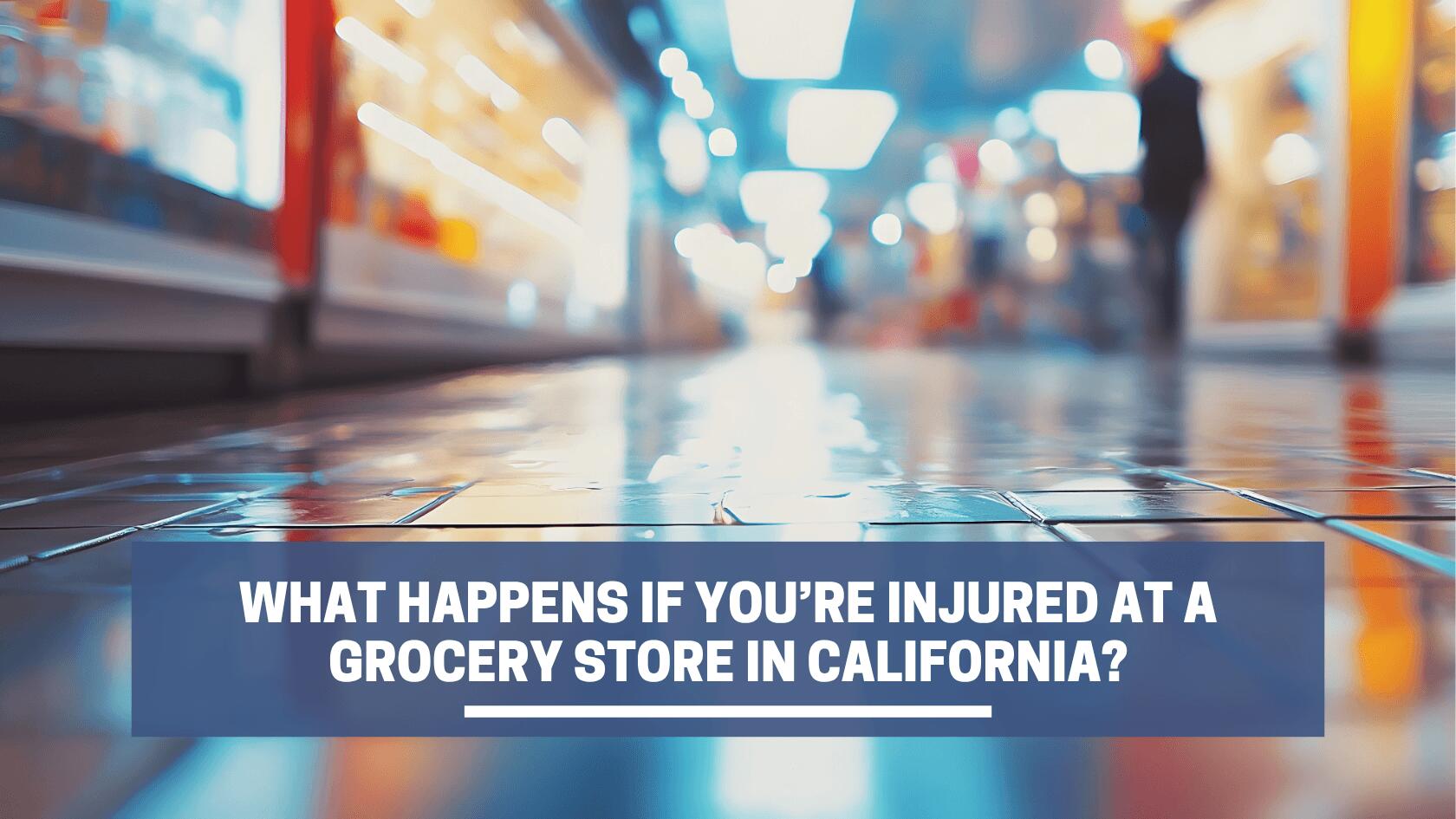
A simple trip to the grocery store can suddenly leave someone dealing with serious injuries, mounting medical bills, and uncertainty about what comes next. Slippery floors, unstable merchandise displays, damaged flooring, poor lighting, and crowded aisles can create dangerous conditions for customers inside California supermarkets.
Stores have a legal responsibility to inspect their premises, address hazards within a reasonable amount of time, and warn customers about conditions that could cause harm. When grocery stores fail to monitor dangerous conditions or correct known hazards, customers may suffer serious injuries that affect their health, mobility, ability to work, and overall quality of life.
According to the National Floor Safety Institute, falls account for more than eight million emergency room visits annually in the United States and remain one of the leading causes of preventable injuries. Grocery stores are common settings for slip-and-fall accidents because of spills, refrigeration condensation, and high foot traffic.
If you were injured at a grocery store in California, you may have the right to pursue compensation under California premises liability law. Understanding how these claims work, what evidence matters most, and how negligence is proven can play an important role in protecting your ability to recover damages after a serious accident.
What Is Premises Liability Law?
Under California Civil Code Section 1714, property owners and businesses owe a duty of reasonable care to people lawfully on their property.
That includes:
- Grocery stores
- Supermarkets
- Big-box retail stores
- Warehouse grocery chains
- Specialty food retailers
Under California premises liability law, stores must:
- Regularly inspect the property
- Repair dangerous conditions
- Warn customers about hazards
- Maintain reasonably safe walkways and displays
If a store fails to take reasonable safety measures and a customer suffers an injury at supermarket property, the store may be liable for damages.
Common Causes of Grocery Store Accidents
A California grocery store accident can occur in different ways, and many of these incidents stem from hazards that employees either failed to notice or failed to correct in time. Because grocery stores experience continuous customer traffic throughout the day, dangerous conditions can develop quickly when inspections and cleanup procedures are inadequate.
Common grocery store hazards include wet floors, unstable merchandise displays, damaged flooring, loose mats, poor lighting, cluttered aisles, and unsafe parking lot conditions.
Wet Floor Accidents
Many grocery store injury claims involve wet floor accidents, particularly near produce sections, refrigerated aisles, freezer cases, and store entrances. Condensation from cooling systems, spilled beverages, and freshly cleaned floors can create slippery surfaces that customers may not notice until it is too late.
A serious slip-and-fall grocery store accident may lead to broken bones, hip fractures, traumatic brain injuries, back injuries, shoulder damage, or serious knee injuries. Older adults may face an especially high risk of complications after a fall, including mobility loss and extended rehabilitation.
Falling Merchandise Injuries
Stores often stack merchandise high to maximize shelf space and create promotional displays. However, improperly secured products or overloaded shelves can pose a danger. Falling merchandise injuries may involve heavy canned goods, glass bottles, bulk items, or unstable seasonal displays collapsing onto customers.
These accidents can cause head injuries, neck trauma, facial injuries, and other serious harm, especially when heavier products fall from elevated shelving.
Trip-and-Fall Hazards
A trip-and-fall injury in a supermarket may occur when customers encounter loose mats, exposed cords, pallets left in aisles, uneven flooring, damaged sidewalks, or poorly marked elevation changes.
Even hazards that appear relatively minor can become dangerous in crowded grocery stores where shoppers may be distracted while pushing carts or navigating narrow aisles.
What To Do After a Grocery Store Accident in California
The steps you take immediately after an accident can affect a future store negligence injury claim. Conditions inside the store may change quickly after an accident occurs, making early documentation important.
| Step | Why It Matters |
| Seek Medical Attention Immediately | Even injuries that seem minor at first may worsen over time. Concussions, spinal injuries, and soft tissue damage do not always produce immediate symptoms. Medical records help connect your injuries to the accident. |
| Report the Accident to Store Management | Notify a manager as soon as possible and request that an incident report be completed. Make note of the manager’s name, the time and location of the accident, and request a copy of the report if available. |
| Photograph the Scene | If you can safely do so, take photos or video of the hazard, the surrounding area, any missing or inadequate warning signs, lighting conditions, visible injuries, and nearby surveillance cameras. This evidence may become critical later. |
| Collect Witness Information | Independent witnesses may help establish how long the hazard existed, whether employees ignored it, or whether warning signs were absent before the accident occurred. |
| Preserve Physical Evidence | Keep the shoes and clothing you were wearing, along with receipts, medical paperwork, and any communication with the store or insurance companies. |
| Be Cautious When Speaking With Insurers | Insurance adjusters may attempt to minimize claims early in the process. Reviewing these common personal injury case mistakes before speaking with insurers may help protect your claim. |
Why It Matters: Even injuries that seem minor at first may worsen over time. Concussions, spinal injuries, and soft tissue damage do not always produce immediate symptoms. Medical records help connect your injuries to the accident.
Why It Matters: Notify a manager as soon as possible and request that an incident report be completed. Make note of the manager’s name, the time and location of the accident, and request a copy of the report if available.
Why It Matters: If you can safely do so, take photos or video of the hazard, the surrounding area, any missing or inadequate warning signs, lighting conditions, visible injuries, and nearby surveillance cameras. This evidence may become critical later.
Why It Matters: Independent witnesses may help establish how long the hazard existed, whether employees ignored it, or whether warning signs were absent before the accident occurred.
Why It Matters: Keep the shoes and clothing you were wearing, along with receipts, medical paperwork, and any communication with the store or insurance companies.
Why It Matters: Insurance adjusters may attempt to minimize claims early in the process. Reviewing these common personal injury case mistakes before speaking with insurers may help protect your claim.
Many injured shoppers unknowingly damage their cases before fully understanding their legal rights or the evidence needed to support a premises liability claim.
How Negligence Is Proven in a Grocery Store Injury Case
A successful premises liability grocery store claim requires more than simply showing that an accident happened. Under California law, the injured person must demonstrate that the grocery store failed to use reasonable care in maintaining safe conditions for customers and that this failure caused the injury.
In most cases, this means proving:
- A dangerous condition existed on the property
- The store knew or should have known about the hazard
- The condition was not corrected or adequately warned about
- The unsafe condition caused the injury
- The injured person suffered damages as a result
One of the most heavily disputed issues in many grocery store accident cases is whether the store had “notice” of the dangerous condition. Notice may be either actual or constructive.
Actual Notice
Actual notice means store employees were aware of the hazard before the accident happened.
This may include situations where:
- An employee saw the spill
- Another customer reported the hazard
- Employees walked past the dangerous condition without addressing it
- Staff failed to place warning signs near the hazard
Constructive Notice
Constructive notice applies when a hazard existed long enough that the store reasonably should have discovered and corrected it through proper inspections.
Evidence supporting constructive notice may include:
- Dirt or cart tracks running through a spill
- Dried liquid residue, suggesting the spill had been there for some time
- Surveillance footage showing the hazard remained unaddressed for an extended period
- Inspection records showing missed safety checks
Evidence often plays a major role in proving negligence in a grocery store accident lawsuit. Incident reports, surveillance footage, maintenance logs, inspection records, photographs, and witness testimony may help establish whether the store owner’s negligence or unsafe property maintenance contributed to the accident.
Store Negligence vs. Customer Responsibility
California follows a “pure comparative negligence” system, meaning an injured customer may still recover compensation even if they were partially responsible for the accident. However, the amount of compensation may be reduced based on their percentage of fault.
Whether a grocery store can be held liable depends on the specific facts surrounding the accident and whether the store acted reasonably under the circumstances.
| Store Negligence | Customer Responsibility |
| Wet floor without warning signs | Ignoring clearly posted warnings |
| Unstable merchandise displays | Running inside the store |
| Broken flooring left unrepaired | Entering restricted employee-only areas |
| Poor lighting in customer areas | Failing to exercise reasonable attention |
Customer Responsibility: Ignoring clearly posted warnings
Customer Responsibility: Running inside the store
Customer Responsibility: Entering restricted employee-only areas
Customer Responsibility: Failing to exercise reasonable attention
Insurance companies frequently attempt to shift blame onto injured customers, which is why evidence such as surveillance footage, witness statements, and maintenance records becomes critical in these cases.
What Compensation May Be Available?
People injured in a California grocery store accident may be entitled to recover both economic and non-economic damages depending on the severity of their injuries and the long-term impact on their lives.
Economic damages compensate for financial losses related to the accident. These damages can include emergency room treatment, hospitalization, surgical costs, physical therapy, prescription medications, future medical care, lost wages during recovery, and reduced earning capacity if the injuries affect the person’s ability to work in the long term.
Non-economic damages address the personal and emotional impact of the injury. In a serious grocery store accident lawsuit, compensation may also be available for pain and suffering, emotional distress, anxiety, loss of enjoyment of life, permanent disability, or lasting physical limitations caused by the accident.
Grocery Store Injury Claim Timeline in California
After an accident at a grocery store, injury claims often progress through several stages before reaching a settlement or trial. Understanding the process may help injured victims prepare for what comes next.
| Stage | What Happens |
| Accident Occurs | The injured person seeks medical treatment, reports the accident, and documents the hazardous condition. |
| Evidence Preservation | Surveillance footage, witness statements, incident reports, and photographs are collected before evidence disappears. |
| Insurance Investigation | The grocery store’s insurer investigates the accident, reviews liability, and evaluates damages. |
| Medical Treatment Continues | The injured person continues treatment while damages and long-term recovery needs become clearer. |
| Settlement Negotiations | Attorneys and insurers negotiate potential compensation for medical bills, lost wages, and pain and suffering. |
| Lawsuit Filing (If Necessary) | If a settlement cannot be reached, a grocery store accident lawsuit may be filed in court. |
| Discovery and Litigation | Both sides exchange evidence, take depositions, and continue negotiations before trial. |
| Settlement or Trial | The case may be resolved through a settlement or proceed to trial for a final decision. |
What Happens: The injured person seeks medical treatment, reports the accident, and documents the hazardous condition.
What Happens: Surveillance footage, witness statements, incident reports, and photographs are collected before evidence disappears.
What Happens: The grocery store’s insurer investigates the accident, reviews liability, and evaluates damages.
What Happens: The injured person continues treatment while damages and long-term recovery needs become clearer.
What Happens: Attorneys and insurers negotiate potential compensation for medical bills, lost wages, and pain and suffering.
What Happens: If a settlement cannot be reached, a grocery store accident lawsuit may be filed in court.
What Happens: Both sides exchange evidence, take depositions, and continue negotiations before trial.
What Happens: The case may be resolved through a settlement or proceed to trial for a final decision.
While some grocery store injury claims resolve relatively quickly, cases involving serious injuries or disputed liability may take substantially longer, depending on the complexity of the evidence and the extent of damages.
When To Contact a Grocery Store Injury Lawyer
After a serious grocery store accident, evidence can disappear quickly, and insurance companies begin evaluating claims almost immediately. At the same time, stores may repair hazardous conditions, clean accident scenes, or rotate surveillance footage as part of normal business operations.
An experienced grocery store injury lawyer can help preserve critical evidence, investigate how the accident occurred, identify unsafe conditions on the property, interview witnesses, and handle communication with insurance companies. Legal representation may also help injured customers properly calculate long-term damages involving future medical treatment, lost earning capacity, and ongoing pain and suffering.
In many grocery store accident lawsuits, proving liability often depends on obtaining maintenance records, inspection logs, surveillance footage of the accident, and other evidence before it disappears.
Grocery Store Employees and Workplace Injuries
When grocery store employees are injured on the job, the legal process differs from that for a customer injury claim. In many situations, injured workers must pursue benefits through California workers’ compensation rather than filing a traditional personal injury lawsuit against their employer.
However, some workplace accidents may also involve third-party liability claims when another company, contractor, or defective product contributed to the injury.
Get Legal Help After a Grocery Store Accident in California
A serious grocery store accident can leave victims facing painful injuries, expensive medical treatment, and lost income. Large grocery chains and their insurance companies move quickly to limit liability and minimize payouts after serious accidents. Injured customers may benefit from legal representation that can help secure evidence, investigate unsafe conditions, and protect the full value of their claim.
The Shirvanian Law Firm represents individuals injured in slip-and-fall accidents, falling merchandise incidents, and other premises liability cases in grocery stores throughout California from multiple locations across the state. If you were injured at a grocery store in California, speaking with an attorney at our firm can help you understand your legal options and what compensation may be available in your case.
Schedule your free case review today.
FAQs
How long does a grocery store injury claim usually take?
Some claims resolve within a few months, while complex cases involving serious injuries or disputed liability may take a year or longer.
Are grocery stores responsible for injuries caused by falling products?
Yes, if unsafe shelving, negligent stocking practices, or unstable displays caused the accident.
What evidence do I need after a supermarket accident?
Important evidence may include photos of the hazard, medical records, incident reports, witness information, and any available surveillance footage showing the accident or dangerous condition.
Can I request surveillance footage from the store?
Yes. You should request the preservation of the footage immediately, as many stores overwrite recordings within days.