

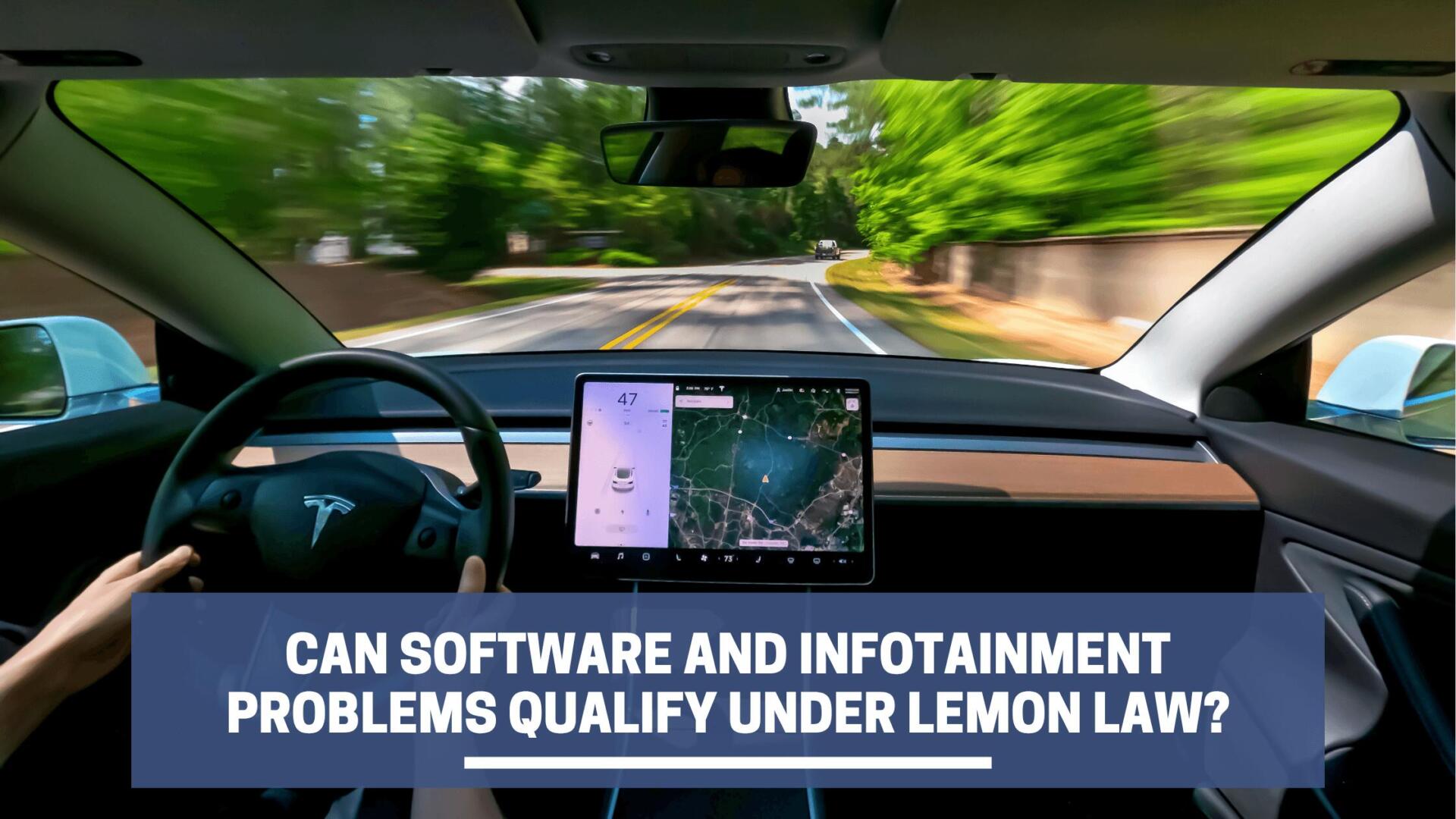
Modern vehicles are essentially computers on wheels. A single software malfunction can affect multiple vehicle systems simultaneously, including safety equipment, climate controls, navigation, and driver-assistance systems (ADAS). When that technology fails, the consequences can extend beyond inconvenience. A recurring software problem can interfere with your ability to operate your vehicle safely and, in some cases, may qualify under California’s Lemon Law.
Software problems Lemon Law claims are evaluated under the same legal standards as mechanical defect claims. Whether the issue involves repeated system crashes, a malfunctioning backup camera, or persistent electronic failures, consumers may have legal rights if the manufacturer cannot repair the defect.
This guide explains when vehicle software defects, infotainment problems, and other electronic failures may qualify under California’s Lemon Law.
How California Lemon Law Applies to Software Defects
California’s Lemon Law, formally known as the Song-Beverly Consumer Warranty Act, protects consumers whose new or qualifying used vehicles contain warranty-covered defects that the manufacturer cannot repair after a reasonable number of attempts.
The law does not distinguish between mechanical failures and software failures. Instead, the question is whether the defect impairs the vehicle’s:
- Use
- Value
- Safety
That means recurring California lemon law software issues may qualify even if the engine and transmission operate normally.
For an overview of your rights, read our ultimate guide to California lemon law.
When Does a Software Problem Become a Lemon Law Issue?
An occasional Bluetooth disconnect or temporary navigation delay is unlikely to qualify on its own. However, recurring software defects that persist despite multiple repair attempts may substantially impair the vehicle’s use, value, or safety.
Examples include:
- Car touchscreen problems that repeatedly freeze or reboot
- Backup camera failures
- Digital dashboard shutdowns
- Navigation system malfunctions
- Repeated warning messages
- Loss of climate controls through the touchscreen
- Persistent connectivity failures
- Failed software update vehicle defects
- Repeated system crashes after over-the-air updates
The more often the problem occurs—and the more it affects your ability to drive the vehicle safely or normally—the stronger your potential claim becomes.
Common Software and Infotainment Defects by Vehicle Brand
While software and infotainment problems can affect virtually any modern vehicle, some manufacturers have received recurring complaints involving specific electronic systems. The table below highlights examples of commonly reported issues by brand.
| Vehicle Brand | Common Reported Defects | Primary System Affected |
| Tesla | Touchscreen failures, software updates, and rearview camera issues | Central display |
| Mercedes-Benz | MBUX infotainment software issues | Digital cockpit |
| BMW | Vehicle software and electronic system issues | Infotainment |
| Porsche | PCM software and software-related issues | Navigation & infotainment |
| Ford | SYNC software, backup camera recalls | Infotainment & safety systems |
Common Reported Defects: Touchscreen failures, software updates, and rearview camera issues
Primary System Affected: Central display
Common Reported Defects: MBUX infotainment software issues
Primary System Affected: Digital cockpit
Common Reported Defects: Vehicle software and electronic system issues
Primary System Affected: Infotainment
Common Reported Defects: PCM software and software-related issues
Primary System Affected: Navigation & infotainment
Common Reported Defects: SYNC software, backup camera recalls
Primary System Affected: Infotainment & safety systems
If you own one of these vehicles, you may also find these resources helpful:
Convenience Features vs. Safety-Critical Technology
Software defects involving federally required safety equipment or essential driving functions carry more weight than problems affecting only convenience features.
| Convenience Features | Safety-Critical Features |
| Bluetooth connectivity problems | Backup camera failure |
| Audio system glitches | ADAS system malfunctions |
| Voice-command errors | Digital dashboard defects |
| Navigation system malfunction | Vehicle safety technology failure |
| Music streaming issues | Speedometer display failures |
Safety-Critical Features: Backup camera failure
Safety-Critical Features: ADAS system malfunctions
Safety-Critical Features: Digital dashboard defects
Safety-Critical Features: Vehicle safety technology failure
Safety-Critical Features: Speedometer display failures
A radio that occasionally resets is frustrating. However, a screen freezing issue that turns off the backup camera, defroster controls, or speed display may affect safe vehicle operation.
Because many modern vehicles integrate multiple functions into a single touchscreen, one software defect can disable several systems simultaneously.
Why Safety-Related Software Defects Matter
Certain electronic safety technologies, such as rearview camera systems on new passenger vehicles, are required under Federal Motor Vehicle Safety Standards. When these systems repeatedly fail, the defects may strengthen a Lemon Law claim because they help reduce crashes.
Potential problems include:
- Backup camera failures
- Blind-spot monitoring malfunctions
- Lane departure warning failures
- Automatic emergency braking malfunctions
- Adaptive cruise control problems
- Collision warning system failures
Search the NHTSA database to find out if your vehicle is subject to an open safety recall or federal defect investigation. You may also find it helpful to stay up to date on recent California laws affecting drivers and vehicle safety.
How Many Repair Attempts Are Usually Required?
Courts look at whether the manufacturer had a reasonable opportunity to repair the problem. The following guidelines often apply during the first 18 months or 18,000 miles:
| Type of Defect | Typical Repair Attempts |
| Safety-related defect | Two or more |
| Non-safety defect | Four or more |
| Vehicle out of service | More than 30 cumulative days |
Typical Repair Attempts: Two or more
Typical Repair Attempts: Four or more
Typical Repair Attempts: More than 30 cumulative days
Every situation is different, but recurring electrical defects, software failures, or repeated unsuccessful repairs can help establish that the manufacturer has been unable to correct the problem.
Always get a copy of the repair order whenever your vehicle is taken to the dealership, even if the problem doesn’t happen while the technician is testing it.
Over-the-Air Updates and Lemon Law Claims
Many manufacturers—including Tesla, Rivian, Lucid, Ford, BMW, Mercedes-Benz, and Porsche—regularly release over-the-air software updates to correct bugs without requiring a dealership visit.
These updates can improve convenience, but they also create new legal questions. Repeated software updates that fail to eliminate the same defect may actually help demonstrate a continuing problem.
Some owners also report that updates:
- Introduce new bugs
- Cause previously fixed problems to return
- Disable existing vehicle features
- Create additional warning messages
Tesla software Lemon Law cases, for example, may involve recurring software or electronic problems that persist despite one or more over-the-air software updates or repair attempts. Whether the vehicle qualifies depends on whether the manufacturer can repair the defect within a reasonable number of attempts.
Keeping a personal record of every update, warning message, and recurring malfunction can strengthen your documentation.
Signs Your Software Problem May Qualify Under California Lemon Law
Although every case is different, the following warning signs may indicate that your vehicle qualifies for protection under California’s Lemon Law:
- The dealership has attempted to repair the same software or electronic issue multiple times.
- Over-the-air software updates fail to resolve the problem permanently.
- The same warning messages or system errors continue to appear.
- Multiple vehicle systems stop working because of a single software defect.
- Your vehicle has been at the dealership for an extended period for repairs.
- Safety systems, backup cameras, digital displays, or other essential driving features repeatedly stop functioning.
If several of these situations apply to your vehicle, it may be worth having your repair history reviewed by a qualified California Lemon Law attorney.
Documenting Software Problems
Software issues are often intermittent, making documentation especially important.
Helpful records include:
- Videos showing frozen screens
- Repair orders
- Service invoices
- Photographs of warning messages
- Dates of over-the-air updates
- Notes describing when the defect occurred
- Mobile app notifications
- Email communications with the dealership or manufacturer
The more evidence you have showing that the problem repeatedly occurs despite repair attempts, the stronger your claim may become.
Talk With a California Lemon Law Attorney
If your vehicle continues experiencing recurring vehicle technology defects, touchscreen failures, backup camera problems, or other electronic issues despite repeated repair attempts, you may have rights under California’s Lemon Law.
The Shirvanian Law Firm helps consumers throughout California evaluate warranty claims involving mechanical, electrical, and software-related defects. We can review your repair history, determine whether your vehicle may qualify, and explain your options for pursuing a refund, replacement vehicle, or other available remedies.
Schedule a free consultation to discuss your situation with an experienced California Lemon Law attorney.
FAQs
Can a backup camera failure make a vehicle a lemon?
Possibly. Because backup cameras are federally required safety equipment on newer passenger vehicles, a recurring failure may substantially affect the vehicle’s safety. If the manufacturer cannot repair the problem after a reasonable number of attempts, it may qualify under California’s Lemon Law.
Do over-the-air updates affect Lemon Law rights?
Yes. A remote software update intended to correct a defect may become part of your repair history. If multiple updates fail to resolve the same issue permanently, they may help demonstrate that the manufacturer has been unable to repair the defect.
How many repair attempts are required for software defects?
Accordion ContentSafety-related defects may require fewer repair attempts than non-safety issues, while vehicles that remain out of service for an extended period may also qualify. An attorney can evaluate your repair history under California law.
What if the dealership says the problem is “normal”?
Dealerships sometimes describe intermittent software glitches as normal or state that they cannot reproduce the issue. That does not necessarily prevent a Lemon Law claim. Continue documenting each occurrence, request written repair orders for every visit, and seek legal guidance if the problem persists.
Disclaimer: This article is provided for general educational purposes only and does not constitute legal advice. Every Lemon Law claim is unique. Consult an experienced California Lemon Law attorney regarding your specific circumstances.