

Receiving an insurance reservation of rights letter after a car accident can be alarming—especially if you’ve never seen one before. Fortunately, the letter does not automatically mean your claim has been denied. Instead, it usually means the insurer is continuing its investigation while preserving certain coverage rights.
Understanding what the letter says, why the insurer sent it, and what may happen next can help you protect your position during the insurance coverage investigation.
What Is a Reservation of Rights Letter?
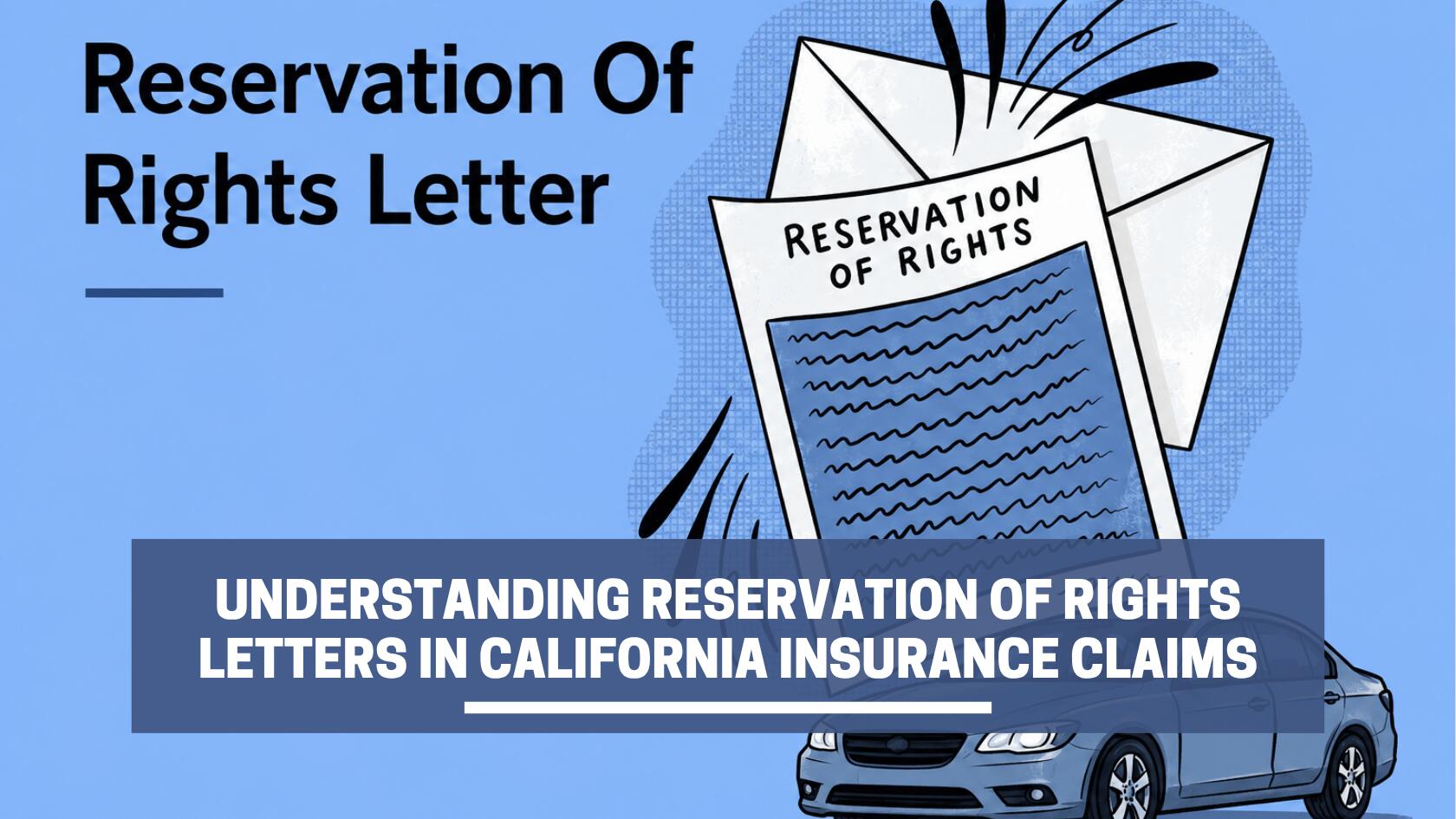
In simple terms, a reservation of rights letter is a written notice explaining that the insurance company will continue investigating the claim—or provide a legal defense, if necessary—while coverage questions remain unresolved.
In effect, the insurer is saying:
We will continue handling the claim for now, but we have not yet determined whether every allegation or loss is covered under the policy.
This means the insurance company can continue handling the claim while keeping the option to deny or limit coverage later if the policy does not apply. Think of it as temporary or conditional coverage rather than a final decision.
Reservation of Rights Letter vs. Claim Denial Letter
A reservation of rights insurance claim letter and a denial letter serve different purposes. Neither should be ignored, but a reservation does not necessarily mean the insurer has refused coverage.
| Issue | Reservation of Rights Letter | Claim Denial Letter |
| Current Position | Coverage remains uncertain | The insurer has concluded that some or all coverage does not apply. |
| Claim Handling | Investigation or defense may continue | The insurer may stop handling the denied portion of the claim. |
| Legal Defense | The insurer may provide defense counsel | A defense may be refused or withdrawn, depending on the circumstances. |
| Coverage Payment | Payment has not been guaranteed | Payment has been refused for the stated reasons. |
| Possibility of Change | The insurer may later accept, limit, or deny coverage | The decision may still be challenged, reconsidered, or reversed. |
| Recommended Response | Review the policy provisions and cooperate carefully | Request a detailed explanation and consider challenging the decision. |
Reservation of Rights Letter: Coverage remains uncertain
Claim Denial Letter: The insurer has concluded that some or all coverage does not apply.
Reservation of Rights Letter: Investigation or defense may continue
Claim Denial Letter: The insurer may stop handling the denied portion of the claim.
Reservation of Rights Letter: The insurer may provide defense counsel
Claim Denial Letter: A defense may be refused or withdrawn, depending on the circumstances.
Reservation of Rights Letter: Payment has not been guaranteed
Claim Denial Letter: Payment has been refused for the stated reasons.
Reservation of Rights Letter: The insurer may later accept, limit, or deny coverage
Claim Denial Letter: The decision may still be challenged, reconsidered, or reversed.
Reservation of Rights Letter: Review the policy provisions and cooperate carefully
Claim Denial Letter: Request a detailed explanation and consider challenging the decision.
A reservation letter does not prove that an exclusion applies or that the company will ultimately issue an insurance denial.
Why Do Insurance Companies Issue Reservation of Rights Letters?
An insurer sends a reservation letter to preserve its contractual rights while completing a claim investigation or defending its policyholder.
If the insurance company starts handling the claim without explaining that coverage is still being reviewed, it could later have a harder time arguing that the policy does not cover the claim.
Common Reasons for a Coverage Reservation
An insurer may issue a coverage reservation because of:
- Possible policy exclusions: The insurer believes an exclusion could apply to one or more allegations.
- Questions about who qualifies as an insured: The driver may not be named on the policy or may fall outside its definition of a covered driver.
- Disputes over vehicle use: The company may investigate whether the vehicle was being used for business, rideshare, delivery, or another potentially restricted purpose.
- Late notice: The accident or lawsuit may not have been reported promptly.
- A policy lapse: Questions may arise about whether the policy was active on the accident date.
- Intentional conduct allegations: Liability policies focus on accidental occurrences rather than intentionally caused harm.
- Failure to cooperate: The insurer may believe the policyholder has not provided requested documents, testimony, or other assistance.
- Damages beyond policy limits: The claim may exceed the available liability coverage, although that issue alone does not eliminate coverage up to the applicable limit.
- Multiple claims or policies: The insurer may need to determine which policy applies and in what order.
Some accidents involve more than one potential source of insurance coverage, which can make the investigation more complex. For example, if you were injured in a car accident while working, where both workers’ compensation and automobile insurance may be involved. The insurer may need to determine which policy applies before making a final coverage decision.
The Duty to Defend and the Duty to Indemnify
Reservation-of-rights disputes involve two separate insurance obligations. Understanding these two duties helps explain why an insurer may continue handling a claim even while questioning whether it must pay a settlement or judgment.
Duty to Defend
The duty to defend is the insurer’s obligation to provide or pay for a legal defense against a covered lawsuit. In California, this duty is generally broader than the duty to indemnify, meaning an insurer may continue defending its policyholder while it investigates whether coverage ultimately applies.
During an insurance claim defense, the insurer may appoint and pay for defense counsel while continuing to evaluate whether the policy requires it to cover a settlement or judgment.
Duty to Indemnify
The duty to indemnify is the insurer’s obligation to pay a covered settlement or judgment, subject to the policy’s terms and limits. Because this obligation depends on the facts ultimately established, an insurer may defend a claim under a reservation of rights but later determine that some or all damages are not covered.
What Happens After You Receive the Letter?
An insurance coverage investigation may proceed alongside the underlying injury claim or lawsuit. A typical process looks like this:
| Stage | What May Happen |
| 1. Claim Notice | The insurer receives notice of the accident, demand, or lawsuit. |
| 2. Initial Review | An adjuster reviews the policy, accident date, parties, and allegations. |
| 3. Reservation Issued | The insurer identifies unresolved coverage questions and cites relevant provisions. |
| 4. Defense Assignment (if applicable) | If a lawsuit has been filed, the insurer may appoint defense counsel to represent the insured. |
| 5. Fact Gathering | The insurer requests statements, records, photographs, reports, or other evidence. |
| 6. Coverage Decision | The insurer accepts coverage, limits coverage, seeks further information, or issues a denial. |
| 7. Dispute or Resolution | The parties may negotiate, request reconsideration, file a coverage action, or pursue other remedies. |
What May Happen: The insurer receives notice of the accident, demand, or lawsuit.
What May Happen: An adjuster reviews the policy, accident date, parties, and allegations.
What May Happen: The insurer identifies unresolved coverage questions and cites relevant provisions.
What May Happen: If a lawsuit has been filed, the insurer may appoint defense counsel to represent the insured.
What May Happen: The insurer requests statements, records, photographs, reports, or other evidence.
What May Happen: The insurer accepts coverage, limits coverage, seeks further information, or issues a denial.
What May Happen: The parties may negotiate, request reconsideration, file a coverage action, or pursue other remedies.
The coverage investigation is separate from determining who caused the crash and how much the injured person may recover. Evidence used to prove a distracted driving accident, for example, may establish fault without resolving a separate disagreement over the at-fault driver’s insurance coverage.
Reservation of rights letters may also arise in other liability claims, including premises liability cases involving injuries on commercial property, such as grocery stores.
How an Insurance Reservation of Rights May Affect Your Claim
An insurance reservation of rights does not automatically reduce the value of your injury claim, but it can create uncertainty about how the claim will be handled. After completing its investigation, the insurer may:
- Confirm coverage: The insurer accepts coverage and continues handling the claim under the policy.
- Provide partial coverage: Some damages, drivers, or policy provisions may be covered while others are not.
- Deny coverage: The insurer concludes that an exclusion, policy condition, or other limitation prevents coverage.
- Identify additional insurance: More than one policy—such as an umbrella, commercial, or another driver’s policy—may apply, affecting how compensation is paid.
Should You Respond to a Reservation of Rights Letter?
Never ignore a reservation of rights letter. Instead:
- Review the letter carefully
- Keep copies of all communications
- Cooperate with reasonable requests
- Preserve relevant evidence
- Speak with an attorney if coverage issues exist
Knowing California motor vehicle accident laws can help accident victims understand how liability and insurance issues interact throughout the claims process.
Can an Insurance Company’s Conduct Become Bad Faith?
Most California insurance claims involving reservation of rights letters are handled appropriately and ultimately resolved without litigation. However, insurance companies must still comply with California law and fairly investigate claims.
Problems may arise if an insurer:
- Unreasonably delays its investigation
- Misrepresents policy language
- Fails to adequately explain a coverage decision
- Conducts an incomplete or biased investigation
- Unreasonably refuses to honor valid coverage
In some circumstances, these actions may support allegations of bad faith insurance, although every situation depends on the specific facts and applicable law.
How an Attorney Can Help
Insurance policies are complicated, and reservation of rights letters are written to protect the insurer—not necessarily to explain your rights in plain language. An attorney can guide you through the pre-litigation claims process, communicate with the insurance company on your behalf, and address coverage issues before they develop into bigger disputes.
An attorney can:
- Review the reservation of rights letter and explain the cited policy provisions
- Determine whether the insurer’s interpretation is consistent with the insurance contract
- Communicate with adjusters and defense counsel on your behalf
- Protect your rights during the coverage investigation
- Challenge an improper denial or other adverse coverage decision when appropriate
In some cases, unresolved coverage questions can become a liability insurance dispute over whether the policy applies to the accident. If those issues cannot be resolved through the claims process, personal injury litigation may be necessary to protect your rights and pursue the compensation you deserve.
Get Help Understanding Your Insurance Coverage
Receiving an insurance reservation of rights letter can be stressful, but it does not necessarily mean your claim or insurance coverage will be denied. In many cases, it simply means the insurer needs additional time to complete its investigation before making a final coverage decision.
An experienced California car accident attorney can explain the issues raised in the letter, protect your interests during the claims process, and address any insurance coverage disputes that arise. The Shirvanian Law Firm represents injured clients throughout California.
Contact us for a free consultation to discuss your case and learn how we can help.
FAQs
Does a reservation of rights letter mean my claim is denied?
No. It means the insurer is still investigating coverage while preserving its right to limit or deny coverage later. The claim may still result in full coverage.
Should I respond to a reservation of rights letter?
Do not ignore it. Review the cited policy provisions, keep a copy, and consider having an attorney review the letter if the claim involves serious injuries, significant financial exposure, or disputed coverage.
Can the insurance company change its decision later?
Yes. After completing its investigation, the insurer may confirm full coverage, provide partial coverage, deny coverage, or continue defending the claim while disputing certain damages or allegations.
Why is the insurance company investigating my claim?
The insurer is determining whether the claim falls within the policy’s coverage. It may review exclusions, driver eligibility, and whether the policy was active at the time of the accident.
How do you respond to a reservation of rights letter?
Review the letter, identify the cited policy provisions, preserve relevant documents, and cooperate with reasonable requests. Consider speaking with an attorney before responding if coverage is disputed or the claim involves serious injuries.