

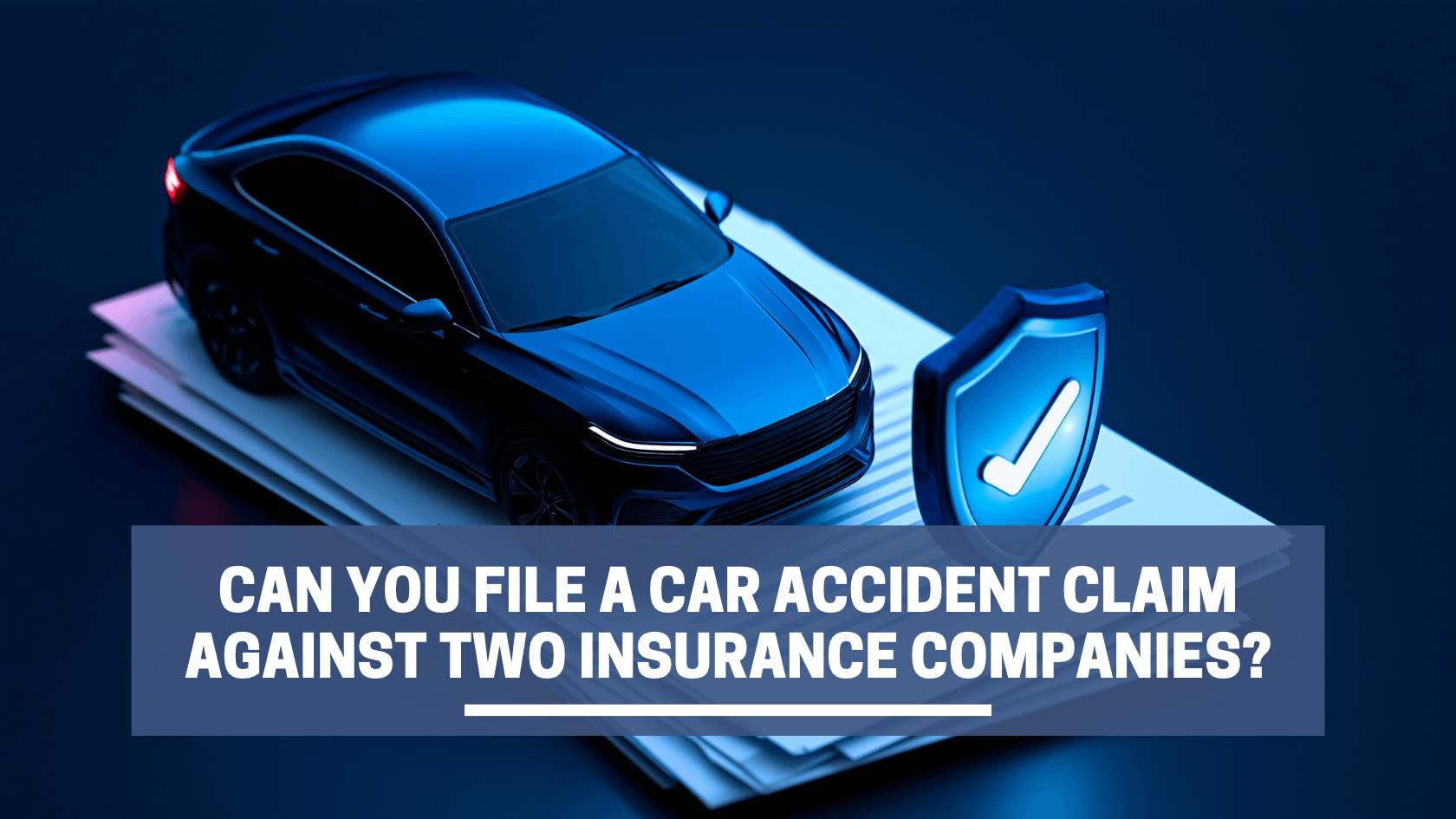
Después de un grave accidente automovilístico, you might discover that more than one insurance policy could cover your injuries. Perhaps two drivers caused the crash, the at-fault driver was using a company vehicle, or your medical expenses exceed the driver’s insurance limits.
Entonces, can you claim from two insurance companies for the same accident?
En muchas situaciones, sí. You may be able to file a car accident claim against two insurance companies when multiple policies apply. sin embargo, you cannot collect compensation twice for the same loss.
When Can You File Claims With Two Insurance Companies?
Filing claims with multiple insurers may be necessary when more than one driver, vehículo, or insurance policy is involved.
Las situaciones comunes incluyen:
- Multiple at-fault drivers: Two or more drivers contribute to an accident, and each has separate liability insurance.
- Insufficient insurance: The at-fault driver’s policy doesn’t cover all your losses, potentially allowing an underinsured motorist claim.
- Uninsured drivers: Your own uninsured motorist coverage may provide compensation when the responsible driver has no liability insurance.
- Borrowed vehicles: Both the vehicle owner’s and the driver’s insurance policies may provide coverage.
- Company vehicles: An employer’s commercial insurance may cover an accident involving an employee.
- Accidentes de viajes compartidos: Uber or Lyft coverage may apply alongside other available policies.
- Additional liability coverage: An at-fault driver may have an umbrella or excess insurance policy.
These situations explain why multiple insurance claims after a car accident are sometimes necessary. sin embargo, having access to several policies doesn’t mean each insurer must pay. Coverage depends on the circumstances, policy language, y California motor vehicle accident law.
How Do Primary, Secondary, and Excess Insurance Work?
When multiple insurance policies apply to a car accident, understanding primary and secondary auto insurance helps determine which insurer pays first.
| Tipo de cobertura | Cómo funciona | Ejemplo |
| Primary Insurance | Responds first to a covered claim, subject to policy limits | The at-fault driver’s liability policy |
| Secondary Insurance | May provide additional coverage depending on policy terms and applicable law | Another policy covering a permissive driver |
| Exceso de seguro | Applies after specified underlying coverage is exhausted | An excess auto liability policy |
| Seguro general | May provide additional liability protection above underlying policies | A personal umbrella policy |
Cómo funciona: Responds first to a covered claim, subject to policy limits
Ejemplo: The at-fault driver’s liability policy
Cómo funciona: May provide additional coverage depending on policy terms and applicable law
Ejemplo: Another policy covering a permissive driver
Cómo funciona: Applies after specified underlying coverage is exhausted
Ejemplo: An excess auto liability policy
Cómo funciona: May provide additional liability protection above underlying policies
Ejemplo: A personal umbrella policy
The order of payment can also depend on the particular policies and circumstances.
Why Insurance Policy Limits Matter
California requires drivers to carry minimum liability insurance of:
- $30,000 Por lesiones corporales o muerte de una persona.
- $60,000 por lesiones corporales o muerte de varias personas en un accidente
- $15,000 por daños materiales
These requirements took effect January 1, 2025, according to the Departamento de Vehículos Motorizados de California.
A serious accident involving surgery, rehabilitación, or extended time away from work can easily exceed these amounts, making car accident insurance coverage limits important.
If the at-fault driver’s liability limits aren’t enough to cover your losses, excess liability insurance after a car accident may provide additional compensation.
What Happens When Multiple Drivers Cause an Accident?
A collision involving several vehicles can create complicated questions about responsibility. Por ejemplo, suppose one driver runs a red light while another is speeding. Both actions contribute to a collision that injures you.
California follows a system of pura negligencia comparativa. This means more than one person can share responsibility, and your compensation decreases according to your own percentage of fault.
If two drivers contributed to your injuries, you may pursue claims involving both insurers.
California also has specific rules about how responsible drivers share the cost of your damages. Responsible defendants may be jointly liable for economic damages, while noneconomic damages are allocated according to each defendant’s percentage of fault.
nuestra guía para determining fault in a California multi-car pileup explains these issues in more detail.
Can Your Own Insurance Pay When the Other Driver’s Coverage Isn’t Enough?
Sí, depending on your policy. Uninsured motorist coverage and underinsured motorist coverage can provide important protection when another driver has no insurance or insufficient coverage.
vc_custom_1647912534559 California Department of Insurance’s automobile insurance guide, insurers must offer uninsured and underinsured motorist coverage, although policyholders can reject it in writing.
Sin seguro cobertura de motorista
Uninsured motorist coverage may apply when:
- The at-fault driver has no liability insurance
- You are injured in a qualifying hit-and-run accident
- Other circumstances meet the policy’s uninsured motorist requirements
Cobertura para conductores con seguro insuficiente
Underinsured motorist coverage may apply when the at-fault driver’s bodily injury liability limits are lower than your applicable UIM limits. Por ejemplo, suppose you have $100,000 in UIM coverage and the responsible driver has $30,000 in bodily injury liability coverage.
If your covered damages exceed $100,000, you might recover:
- $30,000 from the at-fault driver’’ liability insurer
- Hasta $70,000 through your UIM coverage, subject to California law and policy requirements
California offsets the liability payment against your UIM limit. The two policy limits are not simply added together.
This is important to understand when pursuing multiple insurance settlements.
What If the Driver Was Using a Borrowed or Company Vehicle?
An accident involving a vehicle someone else owns may involve two insurance companies in a car accident. Por ejemplo, if someone borrows a friend’s car and causes a collision, the owner’s insurance may provide primary coverage. The driver’s policy might also apply, dependiendo de sus términos.
This is known as permissive use, meaning the driver had permission to operate the vehicle.
similar, when an employee causes an accident while performing job duties, the employer’s commercial auto insurance may provide coverage.
Rental vehicles can involve additional policies, including coverage purchased through the rental company.
Can You File Claims Against Uber or Lyft and Another Insurer?
Sí. Rideshare insurance coverage may involve several insurers, depending on whether the driver was using the app, esperando una solicitud, o transportar un pasajero.
California requires different levels of coverage depending on the driver’s activity. Por ejemplo, rideshare companies must provide $1 million in primary liability coverage after a ride is accepted and during the trip.
sin embargo, uninsured and underinsured motorist requirements are different. California’s SB 371 reduced required rideshare UM/UIM coverage during passenger trips to $60,000 per person and $300,000 por accidente.
Learn more through our resources on Reclamaciones por accidentes de Uber en California, el Uber $1 póliza de responsabilidad civil de millones, y el Iniciativa de reclamación por lesiones de Uber.
We also represent individuals injured in Accidentes de Lyft.
Can You Receive Two Insurance Settlements for the Same Accident?
You may receive payments from more than one insurance company, but California law prohibits double recovery for the same damages.
Por ejemplo, suppose your accident-related damages total $150,000. If one responsible driver’s insurer pays $50,000 and another pays $100,000, you have recovered the full amount of your damages. You cannot collect another $150,000 for those same losses simply because another insurance policy exists.
What About Subrogation and Insurance Coordination?
Insurance coordination helps determine which policy pays first when more than one insurer covers an accident.
Subrogation allows an insurer that paid a covered claim to pursue reimbursement from a responsible party or another insurer.
Health insurers and medical providers may also have reimbursement rights that affect your final recovery.
These issues make it important to review settlement agreements carefully before accepting payment.
What Happens When Insurance Companies Disagree About Who Pays?
A car accident insurance dispute can arise when two insurers disagree about coverage or responsibility. Por ejemplo, one insurer might argue that the driver’s personal policy should cover the accident, while another insists the vehicle owner’s policy is responsible.
Disagreements may involve:
- Whether the driver had permission to use the vehicle
- Whether the driver was working when the accident occurred
- Which policy provides primary coverage
- Whether exclusions apply
- Whether available coverage has been exhausted
A dispute between insurers doesn’t necessarily mean you have no valid claim. sin embargo, it can delay compensation.
An attorney can review the policies, investigate the accident, and help determine which companies may be responsible.
How Do You File a Car Accident Claim Against Two Insurance Companies?
California car accident insurance claims involving multiple policies can be complicated. Taking the following steps can help protect your right to compensation.
- Identify the available insurers: Obtain the driver’s insurance information and determine whether other policies may apply.
- Informar del accidente: Notify your insurer promptly and follow applicable reporting requirements.
- Documente sus pérdidas: Mantener registros médicos, treatment bills, información salarial, y presupuestos de reparación.
- Determine available coverage: Review policy limits, exclusiones, and potential excess coverage.
- Track communications: Keep copies of correspondence, ofertas de liquidación, and claim decisions.
- Review settlements carefully: A release signed with one insurer could affect claims against other responsible parties.
Remember that California insurance claims and personal injury lawsuits have different requirements and deadlines. Don’t assume that filing an insurance claim protects your right to sue.
Si no estás seguro de cómo proceder, aprender when getting a lawyer for a car accident claim may be worthwhile.
Get Help With a Car Accident Claim Involving Multiple Insurance Companies
When several drivers or insurance policies are involved in an accident, identifying all available coverage can make a difference in the compensation you receive.
En el bufete de abogados Shirvanian, our California car accident attorneys can investigate your accident, review applicable insurance policies, and help you pursue compensation for your injuries.
We assist accident victims throughout California, including those seeking a San Diego car accident attorney.
Schedule your free, confidential consultation today. If you’ve been seriously injured, the outcome of your case could make a significant difference to you and your family. Let us focus on your case while you focus on your recovery.